
Evaluation of periapical healing in patients with osteoporosis: A retrospective study
DOI:
https://doi.org/10.5577/hsm.e251213Keywords:
Osteoporosis, periapical index scoring, periapical healing, root canal treatment, apical periodontitisAbstract
Aim: The aim of this retrospective study was to evaluate periapical healing after root canal treatment in patients with osteoporosis presenting with periapical lesions.
Methods: Thirty-five patients diagnosed with osteoporosis who were admitted to the Inonu University Faculty of Dentistry, Department of Endodontics, between January 2010 and September 2018 were initially screened. Three patients without periapical lesions, one patient whose radiographic records were unavailable, one patient who had received inadequate root canal treatment, eleven patients who were unreachable, and twelve patients who were unable to attend follow-up visits were excluded from the study. Consequently, 13 teeth from seven patients were included in the osteoporosis group. The control group consisted of systemically healthy individuals with periapical lesions. Demographic data, medical history, treatment type, and clinical and radiographic findings were recorded. The periapical status before and after treatment was evaluated using the Periapical Index (PAI) scoring system and the American Association of Endodontists’ recommendations.
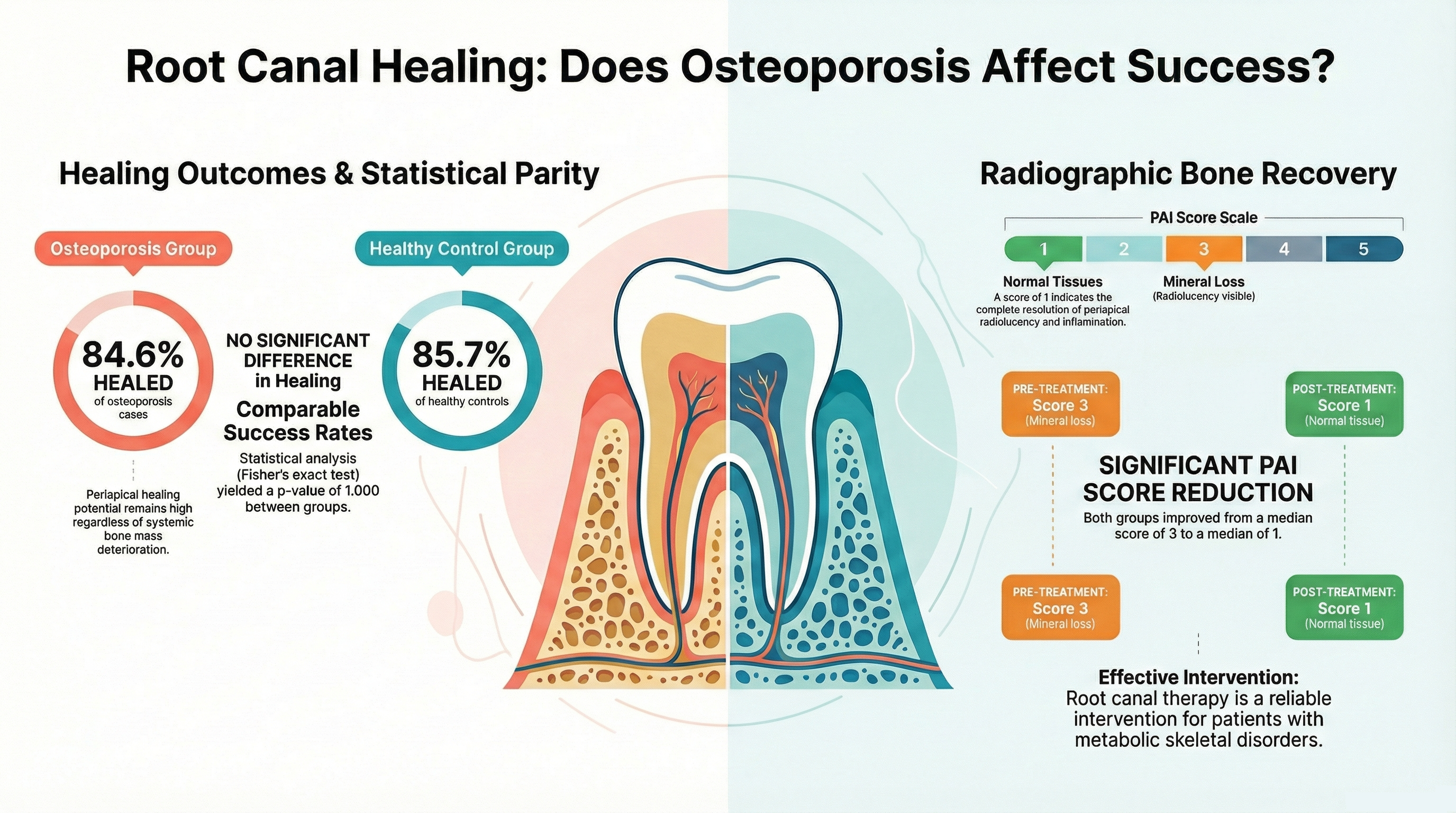
Results: Healing rates were compared between the groups using Fisher’s exact test, and no statistically significant difference was observed (p = 1.000). Changes in periapical status according to PAI scores were analyzed using the Wilcoxon signed-rank test, revealing statistically significant improvements in both the control (p < 0.001) and the osteoporosis groups (p = 0.002). Comparisons of the pre- and post-treatment PAI scores between the groups using the Mann–Whitney U test demonstrated no statistically significant differences either before (p = 0.947) or after treatment (p = 0.804).
Conclusion: Periapical healing following root canal treatment did not differ significantly between patients with osteoporosis and healthy controls. However, further studies involving larger populations are required to confirm these findings.
Downloads
Downloads
Published
Issue
Section
License
Copyright (c) 2025 The Author(s)

This work is licensed under a Creative Commons Attribution 4.0 International License.
This is an Open Access article distributed under the terms of the Creative Commons Attribution 4.0 International License (CC BY 4.0), which permits unrestricted use, distribution, and reproduction in any medium, provided the original work is properly cited.



























 Open Access articles are distributed under the terms of the